
2025 will be remembered as a year of rapid technological growth and advancement, where futuristic technologies began reshaping industries, science and daily life. From the life-saving potential of gene editing to the large-scale integration of artificial intelligence, innovation accelerated across many industries. Below are the top 15 technological advancements that revolutionized 2025 and are likely to shape the near future.
15. Smart homes becoming fully automated

Originally, smart home technology was limited to separate devices, such as blinds, thermostats and lights, operated on their own. But in 2025, WiFi and Bluetooth allowed these devices to work together in an integrated system. Homes could learn routines and manage energy automatically. This turned the original gimmicky feel of smart home automation into a genuinely useful and efficient system.
14. Wearable technology for preventative healthcare

Wearable health devices have evolved from tracking simple fitness metrics to detecting more serious health concerns, such as irregular heart rhythms, sleep disorders and stress indicators. For example, the Apple Watch and Samsung Galaxy Fit3 now feature atrial fibrillation detection, irregular heart rhythm notification and blood oxygen monitoring. Tools like these help users continuously monitor their health and allow them to seek medical attention earlier, ensuring preventative care outside of hospitals.
13. Robotics in healthcare and industry

Robots have become more abundant throughout hospitals, factories and warehouses during 2025. They are incredibly valuable, assisting with physically demanding and repetitive tasks, the transportation of supplies and even surgeries. Robots, such as the da Vinci 5, are used for minimally invasive surgeries. Others, like the Stryker Mako 4, assist in full joint replacement. In warehouses, robots help move raw materials, finished products and even groceries. Additionally, robots have begun replacing human workers due to their cost efficiency, work ethic and reliability. However, many robots still operate under direct human supervision.
12. Virtual reality expanding beyond entertainment

For the last few years, virtual reality (VR) has been an emerging and immersive gaming technology. But in 2025, it had practical applications in education, workforce training, therapy and remote collaboration. Improved headsets made experiences much more realistic and comfortable, transforming VR into a practical functional tool rather than just a gaming device.
11. Digital payments replacing physical cash

Cashless transactions remained overwhelmingly popular in 2025, as mobile wallets and contactless payments started becoming the standard. Many businesses began operating entirely through digital transactions. This transition improved daily convenience but also raised concerns about financial privacy and access.
10. Breakthroughs in cancer detection and treatment

The development of new medical technologies significantly improved methods of cancer treatment and detection. Particularly, better imaging tools allowed doctors to diagnose cancer much earlier and treat it more effectively in its early stages. This, in addition to over 60 new FDA-approved treatment agents being developed, significantly benefited survival rates and quality of life for patients.
9. Battery technology powering clean energy

Battery technology saw major improvements in efficiency, safety and capacity in 2025. These advancements benefited home power systems, energy grid stability and electric vehicles. Primarily, more reliable batteries supported development in clean energy, making it more practical at larger scales.
8. Satellite internet expanding global connectivity

The rapid expansion of satellite-based internet services provided high-speed internet access to more rural and remote regions around the globe. This helped close the digital divide—the gap between those who have access to modern information and technology and those who don’t—improving access to education and economic opportunities worldwide.
7. Cyber security turning into an essential tool

As more of personal and professional life continued to transition online, such as with remote working, social media platforms or even online grocery shopping, cyber security had become critical infrastructure rather than just an optional choice. More than ever before, advanced online systems are essential to protect financial data, private information and national networks.
6. Electric vehicles becoming more common

Many consumers have started to consider electric vehicles (EV) to be the default choice to purchase. In 2025, electric vehicles made major improvements in their range, charging speed and costs. Charging capabilities also continued to expand, making EV ownership much more convenient than it used to be.
5. Sustainable food technology and lab-grown meat

Artificial foods offer significant environmental benefits by reducing water and land usage as well greenhouse gas emissions. Traditionally, however, lab-grown meat and plant-based alternatives have tasted like wax or even plastic, all while being very expensive. However, in 2025, these products drastically improved in both taste and affordability, making sustainable food production much more realistic and scale-able.
4. CRISPR and gene editing

CRISPR gene-editing technology has started to appear in real-world treatments as scientists were successfully able to treat inherited genetic disorders and rare diseases. This advancement can be life changing for patients who’ve previously lost hope on their medical recovery.
3. Artificial intelligence powering industries and governments

Artificial intelligence (AI) became a critical part of society in 2025 by becoming deeply integrated into healthcare, finance, education, defense and government operations. AI systems are used for data analysis, decision-making, automation and national security. AI continues to move from a futuristic concept to an essential infrastructure shaping how modern society functions.
2. Autonomous and assisted transportation technology
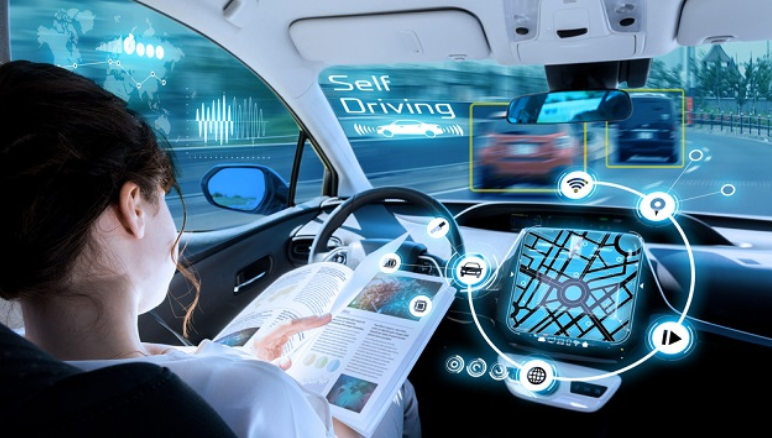
Advanced sensors, cameras and AI decision-making systems have continued to become more common throughout newer vehicles. In 2025, these self-driving and driver-assistance features were significantly improved by replacing old mechanical sensors with solid-state ones, shifting towards End-to-End AI learning and connecting these systems with ultra-low-latency 5G connectivity, effectively allowing vehicles to see the road for themselves.
1. Clean energy expansion around the world

The most impactful technological advancement of 2025 was the rapid expansion of clean energy. Due to intensifying climate concerns, clean energy has shifted from a long-term goal to an immediate global priority. As a result, we saw solar, wind, nuclear and energy storage technologies scaling up worldwide throughout 2025, surpassing coal in electrical energy usage.