

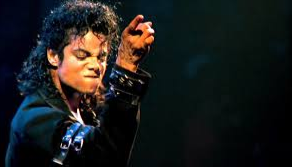
Who hasn’t heard of Michael Jackson? Globally renowned as the “King of Pop,” winner of 15 Grammys, creator of the moonwalk and a prominent philanthropist, Jackson wasn’t just a worldly phenomenon; he was a reformist whose influence expanded far beyond the stage. While Jackson passed in 2009, his legacy has lived on, his music playing on radios, studios and streaming platforms all across the world.
The movie “Michael,” directed by Antoine Fuqua and produced by Graham King, is a biographical film of Jackson’s life, grossing $800 million worldwide. It ranks as the second-highest-grossing film of 2026 and one of the highest-grossing biographical films in history.
“Michael” starts by depicting his family hardships and his life in the Jackson 5, and progresses to the meteoric 1988 “Bad” tour, which opened with a historic $97.2 million at the first concert, and almost $325 million by the end, adjusted for inflation. Despite a glaring 38% Rotten Tomatoes rating by critics, the film has captured the hearts of millions of audience members and Michael Jackson fans across the world.
The film begins with the gritty reality of Gary, Indiana, in the mid-1960s. In the beginning of the movie, we see Joe Jackson, Michael’s father, constantly pushing his children towards greatness in abusive, physical ways. Towards the middle of the movie, “Michael” features recreations of his most iconic music videos, recording sessions and live stage performances. During this time, the movie also highlights Michael’s extreme media scrutiny, his pressure to be perfect and his various health issues, specifically with vitiligo.
“Michael” was an amazing movie for two key reasons: the actors that brought it to life, and the concert atmosphere that followed the film. The main reason why so many viewers enjoyed the movie was due to Jaafar Jackson, Michael’s nephew who nailed the reenactment of his uncle’s singing, dancing and mannerisms. Jaafar intensely studied all of Michael’s stardom and performances–his lip syncing, dance moves, and energy was on point and perfectly reflected the 1980 performances. It was to the point where if one went home and rewatched all of Michael’s original 1980 performances, they would barely find any difference between his production and Jaafar’s.
The movie was also extremely concert-like. In theaters, the performances, songs and studio recordings were energetic and vigorous. During certain points of the movie, audience members were running up near the stage and singing along with the music. As Forbes finds. “There are reports of theatrical experiences in which entire audiences sing and dance to the performances, which even critics rated as great.”
It is true that from a critical lens, the movie was lacking in many aspects. Admittedly, there were many omissions of Michael’s various scandals and controversies, such as the public scrutiny over his changing physical appearance. However, the primary purpose of “Michael” was not to oust and blame Jackson for his past failures and issues. Since the movie was catered to mostly teen and adult audiences with a PG-13 rating, depicting violent scenes like Michael’s disputes with children and legal stipulations wouldn’t be a good idea for viewers.
Ultimately, “Michael” is a one-of-a-kind, revolutionary movie that should, and does, serve as an accessible musical biopic. “Michael” taps into nostalgia by faithfully reenacting the King of Pop’s old, globally renowned performances. Not only are the actors heartfelt, but the plot and music perfectly reenact Michael Jackson’s legacy and life.