

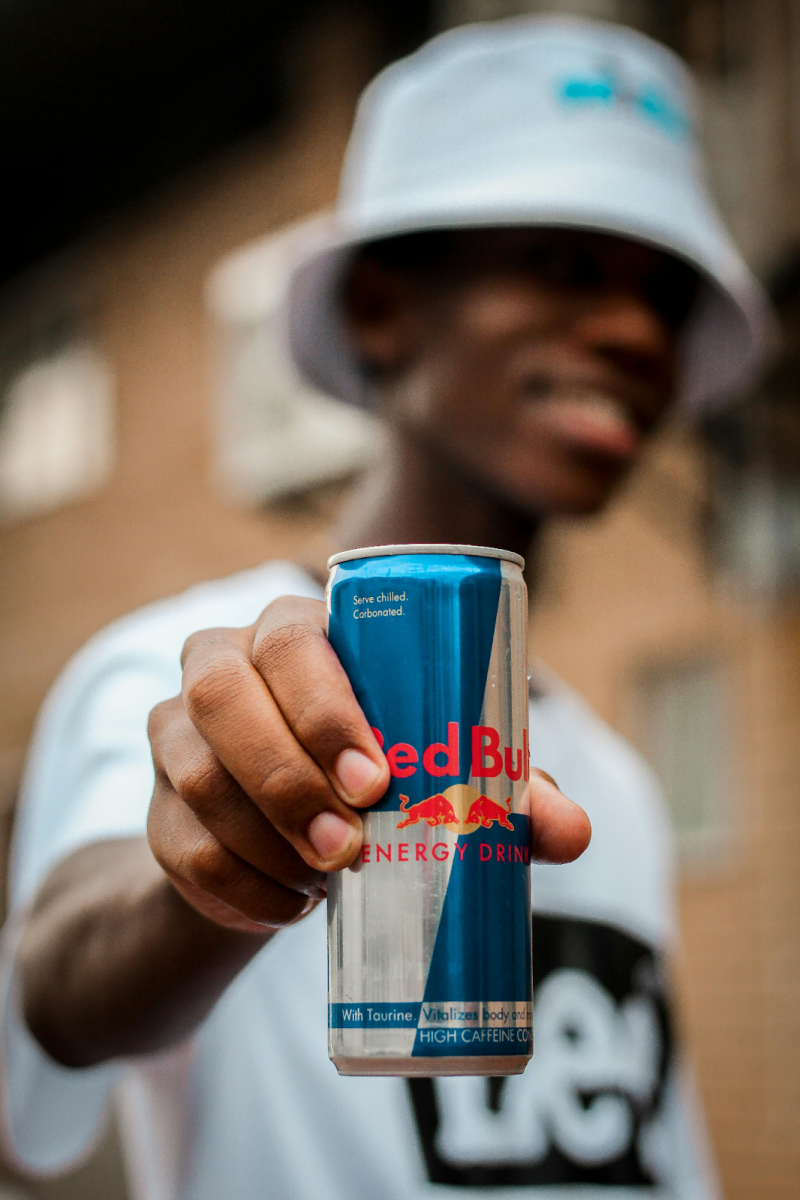
When finals week is coming up, or a huge essay is due at midnight, a 160mg hit of caffeine in a Celsius might feel like a survival necessity. For many students at Jefferson, energy drinks are usually seen as the key to academic success. Although these beverages might promise a short burst of focus, a growing volume of research shows that they are more of an academic placebo that can actually sabotage your GPA.
The main appeal from energy drinks is the promise of higher concentration levels for longer periods of time. Caffeine is the active ingredient in most energy drinks like Monster, Red Bull or Celsius. Most energy drinks have a larger concentration of caffeine than a cup of coffee. Caffeine is a stimulant that blocks adenosine receptors in the brain to keep you awake, but it doesn’t necessarily make you smarter. A study published in the journal Frontiers in Psychology
found that caffeine might improve simple motor tasks and alertness, but it has little to no effect on more complex cognitive functions like problem-solving or memory recall. These skills are the most important when studying to pass a big test. As a matter of fact, the jitteriness associated with high-caffeine intake can lead to a scatterbrain effect. Instead of focusing on a single math problem, your brain might jump between unrelated thoughts, making any long-term concentration impossible.
The most dangerous aspect of the energy drink habit is the inevitable crash your body will face. According to research by the National Library of Medicine, students who consume energy drinks regularly are more likely to experience poor sleep quality and daytime dysfunction. Energy drinks have a half-life of about five to six hours. This means that if you drink one at 6 p.m. to power through a study session, half of that caffeine is still in your system at midnight. This disrupts the rapid eye movement (REM) sleep that is essential for memory consolidation, which is when your brain turns what you studied during the day into long-term memories. By drinking an energy drink to study more, you are essentially preventing your brain from remembering the information that you are trying to learn.
For students already facing the pressure of a high stakes academic environment, energy drinks can fuel anxiety. The CDC warns that the high levels of sugar and stimulants in these drinks can lead to heart complications, dehydration and increased anxiety. This is extremely concerning, because it can cause physical symptoms such as a racing heart, sweaty palms and shortness of breath which mimics panic attacks.
Some students claim that energy drinks are the only way to stay awake after a long day of extracurriculars and seven hours of classes. Yes, it’s true that stimulants provide temporary relief for fatigue, but in the end, this is a short-term fix for a long-term problem. A study in the Journal of Caffeine Research highlighted that heavy consumption of energy drinks can lead to caffeine use disorder. This disorder is an endless cycle where a student is too tired to study without a drink, but too over-stimulated to sleep, leading to chronic exhaustion and burnout. Eventually, your body will build up tolerance and the drinks will stop working entirely which will leave you even more exhausted than when you started. You need to choose between changing your lifestyle and study habits now or keep relying on a substance that will eventually hurt you.
Ultimately, the best study hack still stays the most boring one: consistent sleep and hydration. An energy drink might get you through the next hour, but it will not get you through the semester. If you want to stay on top of your work and prioritize your mental well-being, put down the can of Celsius and pick up a pillow.