
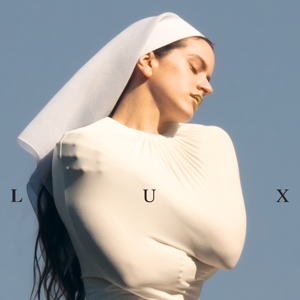
Rosalía’s new album “Lux” arrives as one of the boldest releases in recent pop music, and it signals a major shift in how artists can approach mainstream art. From the moment she revealed the album dressed in a nun’s habit on Madrid’s Gran Vía, it was clear she wasn’t aiming for a typical chart-friendly project. Instead, “Lux” presents a grand, orchestral and deeply spiritual vision that stands apart from anything currently dominating playlists.
Rather than repeating the experimental reggaeton-influenced style of “Motomami,” her previous studio album, or returning to the flamenco storytelling that made her famous, Rosalía steps into a completely new artistic space. Collaborating with the London Symphony Orchestra and choral ensembles, she has built a soundscape that more closely resembles a film score than a Top 40 chart contender. Songs shift between classical, electronic and avant-pop structures with very little interest in accessibility. The album’s four-movement composition shows an artist actively resisting the idea that pop must be “digestible.”
Another striking element of “Lux” is Rosalía’s use of religious and spiritual imagery. In a cultural moment dominated by cynicism, Rosalía’s willingness to engage with spiritual longing feels almost radical. She explores ideas of devotion, forgiveness, inner conflict and transformation with a seriousness rarely seen in mainstream music. Whether listeners interpret it as personal, symbolic, or theatrical, it adds a weight and ambition that sets the album apart from its peers.
What makes “Lux” especially significant is what it represents for the future of global pop music. Rosalía has already influenced a generation of artists through her fearless genre fusion. With “Lux”, she pushes the industry even further into a new territory of cross-cultural experimentation and high-concept storytelling. For an artist with global reach, this matters. If “Motomami” inspired a wave of hyper-expressive, experimental pop, “Lux” could spark a renaissance of orchestral albums. By stepping out of the norm, she shows that pop can still evolve and challenge listeners. In an industry that often rewards sameness, “Lux” shows that taking risks can lead to powerful, original work.
Of course, this album will not please everyone. It isn’t designed to. Some will call it pretentious. Others will find it too dense, too dramatic, or too strange. But to reduce it to those critiques is to miss its purpose. “Lux” proves that pop music doesn’t have to be formulaic. Rosalía’s willingness to create something this daring makes it not just an album, but a standard for what modern pop is capable of.